Monday, April 28, 2008

We Love God But Not Like We Love Our Freedom


The 1689 LBC has this to say about the Fall:

Although God created man upright and perfect, and gave him a righteous law, which had been unto life had he kept it, and threatened death upon the breach thereof, yet he did not long abide in this honour; Satan using the subtlety of the serpent to subdue Eve, then by her seducing Adam, who, without any compulsion, did willfully transgress the law of their creation, and the command given unto them, in eating the forbidden fruit, which God was pleased, according to his wise and holy counsel to permit, having purposed to order it to his own glory.
( Genesis 2:16, 17; Genesis 3:12,13; 2 Corinthians 11:3 )


Along with this I will include the 1689 statement on the will.

One of the things that is often breezed by is the nature of the fall, pre and post condition of man. It will take some development to establish what I am going to say later about a notable Southern Baptist whose influence must be widely credited with the establishment of the SBC majoritarian party's doctrinal position, today. Right now I have to establish a framework.

First, we need to discover what the estate of man was prior to the fall. The 1689 states:

After God had made all other creatures, he created man, male and female, with reasonable and immortal souls, rendering them fit unto that life to God for which they were created; being made after the image of God, in knowledge, righteousness, and true holiness; having the law of God written in their hearts, and power to fulfil it, and yet under a possibility of transgressing, being left to the liberty of their own will, which was subject to change...Besides the law written in their hearts, they received a command not to eat of the tree of knowledge of good and evil, which whilst they kept, they were happy in their communion with God, and had dominion over the creatures.


Things that need to be noticed here are: image, fit, immortality, knowledge, righteousness, true holiness. There is much more to the likeness. Let's take a look at these, but briefly, since what I want to establish is that man was created after the image of God. He was not created, god, but after the image of God. Like all things in creation, man shows forth God's glory, Romans 1 and elsewhere. To sum it up man was made perfectly perfect as a expression of God's creation.

The character and attributes of God are developed throughout Scripture, and here we see some as expressed in the make up of man. This immediately throws us upon a dilemma. We know from the commandments that we are not to make images of the likeness of God. We are told that God is not a man. Therefore we need a definition of image that is compatible. The descriptors actually give us that definition, with some qualifications. The qualifications can be summed up in the fact that man is a creature, a product of creation and by definition cannot be what created it. He can be like the maker, but not the maker.

Qualifications:

Immortality is not inherent in man. Eternal life is inherent only in God; 1 John 5:11; 1 John 5:20. In him alone is life. Man is made, and being made is mortal. The continuance of the soul of man is established, not in man, but in the power of God to sustain it. In other words if God so chose, he could destroy the soul. And, I for one believe that he does, for believers in the new birth. But I digress.

Knowledge again is not something that is inherent in man. God alone is the ground of all knowledge. What man does know is what God has given him; Job 21:22. That too can be taken or added according to God's good pleasure.

Righteousness and true holiness are again not inherent in man, they have their beginning and terminus in God. The One who alone is good; Luke 18:19, is also the One who alone is righteous; Isaiah 45:24. But here we must pause and question the difference between righteousness and holiness. If we want we might capture the sense of difference as that which Jesus said,

Greater love has no one than this, that someone lay down his life for his friends.
Holiness we might say is that which does, and righteousness, that which is done. Holiness and righteousness are not without each other. Again, though, what we have is man created who is not inherently these things, but he is made to be this image or likeness.

The beginning quote contains this incredible statement:
God created man upright and perfect
As I have tried to emphasize, what is inherent in God is not inherent in man. But there is an image, or likeness, that was perfect. It was perfect in the reflection of the communicable attributes of God, it was perfectly made, suited, "fit" the word used in the confession, to glorify God in his creation. As the apex, all that was made had been perfected in man, to be the summation of all that God wanted to communicate with man about Himself. We find him upright. Later though we will find him fallen. The NT term for resurrection, anastasis means to stand one again upon his feet. Though man was meant to worship his God in the humility of heart that is fitting a creature of his creator, God had created man to stand in his presence.

That is enough to get us started. We will look next at the nature of God so that we might learn more about man and what really took place and what was the tragedy and extent of the fall.

Saturday, April 26, 2008

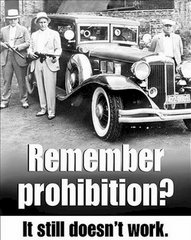
Distributing the Hooch!

It's funny how stuff works out sometimes...

Until a few weeks ago, I really didn't overtly (or covertly) push my theological opinions on anyone. I mainly discussed "the Doctrines" with other Calvinists, on my blogs, and with my immediate family.

By God's providence all that has changed in the past few weeks! After much grief and the loss of my position at church, I've now been afforded the opportunity to openly discuss the Doctrines with people I never would've thought possible before! People are now curious. They have questions. And I want to help them find the answers!

Yesterday I launched a small campaign to get the Amazing Grace DVD into the hands of anyone from church who is interested in finding out more about what we Calvinists believe! Prior to this unpleasant turn of events, I would've never even thought of attempting such a thing. The fact is, through the unpleasantness of recent days, we now have people seriously studying their Bibles and interested in learning more about the Doctrines of Grace.

What at first looked to be the tragic "end" of my ministry, I am now growing more and more optimistic that it could be my greatest opportunity yet. I now have the chance to inspire people to think deeply about theological issues they've probably never considered before.

I covet your prayers as I openly and unashamedly distribute our "prohibition hooch" to all who seek to know the truth about what we believe!

Post Tenebras, Lux!

Friday, April 25, 2008

Baptists and Free Will

It is simply a falsehood to state that all Baptists have always believed that man has a free will that can either accept or reject the gospel.


The Philadelphia Confession (Baptist) of 1742 has this to say on the topic of man's "free will."


Man, by his fall unto a state of sin, hath wholly lost all ability of will to any spiritual good accompanying salvation; so as a natural man, being altogether averse from that good and dead in sin, is not able, by his own strength, to convert himself or to prepare himself thereunto.


When God converts a sinner, and translates him into the state of grace, He freeth him from his natural bondage under sin, and by His grace alone, enables him freely to will, and do that which is spiritually good; yet so that, by reason of his remaining corruptions, he doth not perfectly nor only will that which is good, but doth also will that which is evil.


The will of man is made perfectly and immutably free to good alone in the state of glory only.


Similarly, the Sandy Creek Association (one of the very first and most important Southern Baptist groups) included this statement in their confession:


That Adam fell from his original state of purity, and that his sin is imputed to his posterity; that human nature is corrupt, and that man, of his own free will and ability, is impotent to regain the state in which he was primarily placed.


(Just so that we're on the same page here, "impotent" means powerless, without strength. The Sandy Creekers believed that fallen man's will was powerless in the realm of salvation.)

Thursday, April 24, 2008

Why the Reformed Mafia?

Over the past few weeks I have realized that some are upset that some members here were Calvinists, but some are upset simply because of the Mafia theme. However, As I have stated in the past, The Reformed Mafia is no Mafia at all. It is simple a theme built on a statement by J.I. Packer, a prolific Christian author, and author of best seller, Knowing God. But as it has come to my attention that people are offended by this material, and by name being attached, I am resigning as a member of the Mafia. I know this comes as a shock, but as a future minister, I do not believe that persecution for a blog theme is really all that much worth it. As I know two former authors whom this blog has caused problems for regarding job status, I do not believe it is worth it for me. I don't want to seek to offend, only to edify. To some who have found this blog offensive, I apologize, for that is not the intended purpose. I will continue blogging, at www.freegraceministries.blogspot.com.

For new readers, do not be offended at this site. It is simply a theme suppose to be funny, but a place where we deal with issues in the church, and theological issues. In my dealings with these men, I have found them to be godly men who have a desire to know God and His Word. Listen to them, read their writings. Learn from them. Read their writings with an open Bible and open heart.

If you have questions, I can be reached by email at servindalord@hotmail.com

Wednesday, April 23, 2008

New Muscle

I want to announce the happy tidings that the Reformed Mafia is welcoming another new writer, Thomas Twitchell (a/k/a Strong Tower).

Things have been hectic here and I haven't had the time to properly introduce him. I have been reading his stuff for many months, and am excited that he's agreed to come on board with us here at the Mafia.

With the recent addition of both Thomas and the Highland Host, the composite I.Q. of the Reformed Mafia has experienced a marked jump upwards.

Thomas seems a bit more willing to "mix it up" than some of us have been in the past. I think that's a good thing.

To the anti-Calvinists, anti-Baptists out there, I say, "Let's you and Twitchell fight."

Welcome, brother!

John 3:21 via Ephesians 2:10

Ephesians 2:10

For we are his workmanship, created in Christ Jesus unto good works, which God hath before ordained that we should walk in them.

Of this verse John Calvin said:

For we are his work. By setting aside the contrary supposition, he proves his statement, that by grace we are saved, — that we have no remaining works by which we can merit salvation; for all the good works which we possess are the fruit of regeneration. Hence it follows, that works themselves are a part of grace.

When he says, that “we are the work of God,” this does not refer to ordinary creation, by which we are made men. We are declared to be new creatures, because, not by our own power, but by the Spirit of Christ, we have been formed to righteousness. This applies to none but believers. As the descendants of Adam, they were wicked and depraved; but by the grace of Christ, they are spiritually renewed, and become new men. Everything in us, therefore, that is good, is the supernatural gift of God. The context explains his meaning. We are his work, because we have been created, — not in Adam, but in Christ Jesus, — not to every kind of life, but to good works.

What remains now for free-will, if all the good works which proceed from us are acknowledged to have been the gifts of the Spirit of God? Let godly readers weigh carefully the apostle’s words. He does not say that we are assisted by God. He does not say that the will is prepared, and is then left to run by its own strength. He does not say that the power of choosing aright is bestowed upon us, and that we are afterwards left to make our own choice. Such is the idle talk in which those persons who do their utmost to undervalue the grace of God are accustomed to indulge. But the apostle affirms that we are God’s work, and that everything good in us is his creation; by which he means that the whole man is formed by his hand to be good. It is not the mere power of choosing aright, or some indescribable kind of preparation, or even assistance, but the right will itself, which is his workmanship; otherwise Paul’s argument would have no force. He means to prove that man does not in any way procure salvation for himself, but obtains it as a free gift from God. The proof is, that man is nothing but by divine grace. Whoever, then, makes the very smallest claim for man, apart from the grace of God, allows him, to that extent, ability to procure salvation.

Created to good works. They err widely from Paul’s intention, who torture this passage for the purpose of injuring the righteousness of faith. Ashamed to affirm in plain terms, and aware that they could gain nothing by affirming, that we are not justified by faith, they shelter themselves under this kind of subterfuge. “We are justified by faith, because faith, by which we receive the grace of God, is the commencement of righteousness; but we are made righteous by regeneration, because, being renewed by the Spirit of God, we walk in good works.” In this manner they make faith the door by which we enter into righteousness, but imagine that we obtain it by our works, or, at least, they define righteousness to be that uprightness by which a man is formed anew to a holy life. I care not how old this error may be; but they err egregiously who endeavor to support it by this passage.

We must look to Paul’s design. He intends to shew that we have brought nothing to God, by which he might be laid under obligations to us; and he shews that even the good works which we perform have come from God. Hence it follows, that we are nothing, except through the pure exercise of his kindness. Those men, on the other hand, infer that the half of our justification arises from works. But what has this to do with Paul’s intention, or with the subject which he handles? It is one thing to inquire in what righteousness consists, and another thing to follow up the doctrine, that it is not from ourselves, by this argument, that we have no right to claim good works as our own, but have been formed by the Spirit of God, through the grace of Christ, to all that is good. When Paul lays down the cause of justification, he dwells chiefly on this point, that our consciences will never enjoy peace till they rely on the propitiation for sins. Nothing of this sort is even alluded to in the present instance. His whole object is to prove, that,

“by the grace of God, we are all that we are.”
(1 Corinthians 15:10)

Which God hath prepared Beware of applying this, as the Pelagians do, to the instruction of the law; as if Paul’s meaning were, that God commands what is just, and lays down a proper rule of life. Instead of this, he follows up the doctrine which he had begun to illustrate, that salvation does not proceed from ourselves. He says, that, before we were born, the good works were prepared by God; meaning, that in our own strength we are not able to lead a holy life, but only so far as we are formed and adapted by the hand of God. Now, if the grace of God came before our performances, all ground of boasting has been taken away. Let us carefully observe the word prepared. On the simple ground of the order of events, Paul rests the proof that, with respect to good works, God owes us nothing. How so? Because they were drawn out of his treasures, in which they had long before been laid up; for whom he called, them he justifies and regenerates.


John 3:21
"But he who practices the truth comes to the Light, so that his deeds may be manifested as having been wrought in God."


Ergazomai, wrought, is from the same root as deeds, ergon. Poieo is the word for practices and is synomynous with deeds. We can add to this that Ephesians begins with predestinational passages and while some would like to argue that it is just the "plan" that was predestined, this verse in John perfectly compliments the fact that the works, that is the fruits of salvation beginning to end, are formed by the potter
in order to make known the riches of his glory for vessels of mercy, which he has prepared beforehand for glory—


It is not known exactly where Jesus' words end and John's resume in Chapter 3. But, one thing is clear. The ones able to do the works of faith are only those who can perceive and understand and come into the light. To do that they must have been born from above and given new eyes, ch.1 v.5 & 12-13 c.f. ch.3 v.3. That is consistent, as it is written, everything that is not of faith is sin. And therefore, sin cannot choose in faith and faith cannot choose sin or it would be a contradiction of itself, just as much as it would for the darkness to comprehend the Light, or blindness to see it.

Indeed, as Calvin says, faith cannot will but to do that which it was created in God to do, practice righteousness. And it is not of us, but like all of the new creation, is a gift. It comes down from above, good and perfect. To claim it can do otherwise is to admit that faith can will unfaithfulness, and that is contrary to truth.

Tuesday, April 22, 2008

Forgetting Spurgeon all over again


In 1966 Iain H. Murray's book The Forgotten Spurgeon was published by the Banner of Truth Trust. On the back of the book the blurb reads:


"This book seeks to throw light on the reasons which have given rise to the superficial image of Spurgeon as a genial Victorian pulpiteer, a kind of grandfather of modern evangelicalism."

Murray's chapter titles are highly suggestive: 'Arminianism against Scripture', 'Arminianism and Evangelism' stand out in particular. What was forgotten about Spurgeon, Murray says, is his Calvinism. A modern, 'non-doctrinal' evangelicalism is uncomfortable with a man like Spurgeon, who believed a decided doctrine, and a doctrine that is so opposed to the man-centred theology of free-will, a theology that is quite acceptable to the natural man.

Yet Spurgeon is forgotten again. Modern free-willer Baptists, trying to shore up their ahistorical claims that their position is 'the Baptist position', claim Spurgeon for themselves, either ignorant of his true position or, what is worse, they know the truth and choose to pretend that the reverse is true. Yes, Spurgeon opposed hyper-calvinism, but he opposed it as a distortion of true Calvinism, which he held to be the teaching of the Bible.
Spurgeon's Gospel preaching presupposed two things - the total depravity and inability of human nature, and the sovereign power of God to work through the Word preached. That is to say, if Spurgeon called on his congregation and readers to repent and believe the Gospel, he did not call on them to do this because they had the ability to do so in themselves naturally, but because he believed the Holy Spirit was able to regenerate them (we know this statement will give free-willers all kinds of fits, but it happens to be true). Spurgeon liked to quote Dr. Isaac Watts:
Why was I made to hear thy voice,
And enter while there's room;
When thousands make a wretched choice,
And rather starve than come?

'Twas the same love that spread the feast
That sweetly forced me in;
Else I had still refused to taste,
And perished in my sin.

I hope that any free-willers were paying attention to those words. "But love doesn't force!" Really? The love of God, shed abroad in our hearts by the Holy Spirit, does not compel us? You see, this is what effectual calling is, it is that God draws us, not by force (except poetically speaking), but by the sweet, strong and irresistible motions of His love. What, when the Holy Spirit teaches me that the Son of God loved me and gave Himself for me, can I do anything but fall at His feet in wonder, love and praise? No! as God says to His people: "I have loved thee with an everlasting love, therefore with lovingkindness have I drawn thee, "No man can come unto me unless the Father which hath sent me draw Him, and all that the FAther hath given me shall come unto me."

Again, I point back to 'All of Grace', Spurgeon's little Gospel presentation book. This is a book that is such a contrast to free-will preaching today that the reader will feel as if he has gone from marshmallow to 70% cocoa dark chocolate, it is so rich.
I have no objection to non-Calvinists quoting Spurgeon. I often quote John Wesley myself, and the only reason I was able to quote Adam Clarke in an earlier post is that I consult his commentary. But please, I would never dream of making Adam Clarke or either of the Wesleys Calvinists. Honour Calvin as I honour those men - don't pretend that he held a theology different from the one he really did hold.