Some of the theological elite (i.e. ministers of cultural retreat) have been critical of the reaction of rank and file conservative Christians to Phil Robertson/A&E debacle. They say we should hold our fire defending the duck man; wait for more important battles in the future...
If the highfalutin types are always retreatin' like the Brits at Dunkirk over matters trivial, from whence cometh the notion they'll all of a sudden be faithful in larger battles that lay ahead?
They won't I tell you. Because they have neither the courage nor the desire.
Douglas Wilson hits it out of the park here:
The Scars on your Forearms, by Douglas Wilson
Showing posts with label callin' it like it is. Show all posts
Showing posts with label callin' it like it is. Show all posts
Sunday, December 22, 2013
Wilson wants to see some scars on their forearms.

Monday, December 8, 2008
Does A Bad Tree Bear Good Fruit?
Jesus finishes his discourse in beatitudes by stating the defining difference between the children of the kingdom and the children of the world.
Primary to the entrance into the kingdom is the necessity that one is born again. The term is not found in John 3, there the term is anothen gennao, born from above, or born from the beginning. The term born again is found in 1 Peter , anagennao, again born or born again. The distinction is subtle. The former indicates the origin or the source of the action, the latter, the action itself perfected. That is to say, the cause and effect. Indeed, in the first case what is hidden from view is the monergistic work of the Spirit in bringing about the conditions that will make it possible for one to understand the "beauty" of Truth. In the second, that generating action is found to have been accomplished, what is seen of the wind.
At the end of this article: Regeneration Necessary to Perceive the Beauty and Excellency of Divine Things Charles Hodge quotes J. Edwards
"...It is agreeable to the sense of the minds of men in all ages, not only that the fruit of effect of a good choice is virtuous, but the good choice itself from which that effect proceeds; yea, and not only so, but also the antecedent good disposition, temper or affection of the mind from whence proceeds that good choice, is virtuous. This is the general notion, not that principles derive their goodness from actions, but that actions derive their goodness from the principles whence they proceed; and so the act of choosing that which is good is no further virtuous than it proceeds from a good principle or virtuous disposition of mind; which supposes that a virtuous disposition of mind may be before a virtuous act of choice; and that therefore it is not necessary that there should first be thought, reflection, and choice before there can be any virtuous disposition. If the choice be first, before the existence of a good disposition of heart, what signifies that choice? There can, according to our natural notions, be no virtue in a choice which proceeds from no virtuous principle but from mere self-love, ambition, or some animal appetite." - 140 Jonathan Edwards, Works, vol 1 (Edinburgh, Banner of Truth, 1974), p. 177.
Hodge says:
It is the motive which gives the moral character to the act. If the motive is good, the act is good; if the motive is bad, the act is bad; if the motive is indifferent, so is the act. The act has no character apart from the motive This, it seems, is admitted with regard to all moral acts excepting the first. But the first act of a holy kind is an act of obedience, as well as all subsequent acts of the same kind. How then is it conceivable that the first act of obedience performed from the mere desire or self-love can be holy, when no other act of the same kind and performed from the same motive, either is or can be? How does its being first alter it very nature? It is still nothing more than as act done for self-gratification, and cannot be a holy act.
In earlier threads and with the eruption of accusations against James White as being both hyper-Calvinistic and freshly developing a new position has come the in house Calvinist debate on the ordo salutis and when regeneration takes place. As Hodge says, there really in no difference between the Arminian position and the defective Calvinistic belief that regeneration proceeds from faith. But, as can be seen, both the logical order and the temporal order must be that a righteous nature is regenerated before the action of faith can be considered a moral act. In other words, as I have argued elsewhere, and as John informs us, without a new nature and the abiding Holy Spirit, no one can believe. Having faith, as righteous act, can only proceed from a regenerated nature. Without a renewed nature, faith in Christ is sin, mere animal sensuality.
Friday, September 5, 2008
By Grace God Is The Monergistic Causal Agent
22Therefore say to the house of Israel, "Thus says the Lord GOD: "I do not do this for your sake, O house of Israel, but for My holy name's sake, which you have profaned among the nations wherever you went. 23And I will sanctify My great name, which has been profaned among the nations, which you have profaned in their midst; and the nations shall know that I am the LORD," says the Lord GOD, "when I am hallowed in you before their eyes. 24For I will take you from among the nations, gather you out of all countries, and bring you into your own land. 25Then I will sprinkle clean water on you, and you shall be clean; I will cleanse you from all your filthiness and from all your idols. 26I will give you a new heart and put a new spirit within you; I will take the heart of stone out of your flesh and give you a heart of flesh. 27I will put My Spirit within you and cause you to walk in My statutes, and you will keep My judgments and do them. 28Then you shall dwell in the land that I gave to your fathers; you shall be My people, and I will be your God. 29I will deliver you from all your uncleannesses. I will call for the grain and multiply it, and bring no famine upon you. 30And I will multiply the fruit of your trees and the increase of your fields, so that you need never again bear the reproach of famine among the nations. 31Then you will remember your evil ways and your deeds that were not good; and you will loathe yourselves in your own sight, for your iniquities and your abominations. 32Not for your sake do I do this," says the Lord GOD, "let it be known to you. Be ashamed and confounded for your own ways, O house of Israel!"
33"Thus says the Lord GOD: "On the day that I cleanse you from all your iniquities, I will also enable you to dwell in the cities, and the ruins shall be rebuilt. 34The desolate land shall be tilled instead of lying desolate in the sight of all who pass by. 35So they will say, "This land that was desolate has become like the garden of Eden; and the wasted, desolate, and ruined cities are now fortified and inhabited.' 36Then the nations which are left all around you shall know that I, the LORD, have rebuilt the ruined places and planted what was desolate. I, the LORD, have spoken it, and I will do it."
37"Thus says the Lord GOD: "I will also let the house of Israel inquire of Me to do this for them: I will increase their men like a flock. 38Like a flock offered as holy sacrifices, like the flock at Jerusalem on its feast days, so shall the ruined cities be filled with flocks of men. Then they shall know that I am the LORD."'"
In the above passages from Ezekiel 36, a unique thing occurs. Something that the Lord says is not done for anything that man has done. verse 32 The sequencing is familiar:
Jesus answered and said to him, "Most assuredly, I say to you, unless one is born again, he cannot see the kingdom of God."
What must happen to a man first so that he believes into Christ is the Dividing Line.
As John Hendryx explains:
God does indeed give a prevenient grace to man: According to Scripture, all people are born dead in sin (Eph 2:1). This simply means that, as a result of the Fall, people are born without the Holy Spirit and therefore, (left to themselves) are hostile to Christ and unable to understand to spiritual things (1 Cor 1:21). It does not mean they can do (or think) nothing in their state of common grace, but it means they can do nothing spiritual or redemptive ... that they will always think God's word is foolish (1 Cor 2:14) until the Holy Spirit, who comes from the outside, works grace in their hearts.
Now, what may come as a surprise to many is that even the most hardened Arminian believes this. Semi-pelagians do not believe this, of course, but Classic Arminians along with Calvinists believe, with the Scripture, in the necessity of some kind of prevenient grace prior to belief. And it is important that we make this distinction so we do not misrepresent anyone's views. So to the question: can any person come to faith in Christ apart from the work of the Holy Spirit, both the Arminian and the Calvinist would definitively answer "no".
As is demonstrated in the Ezekiel passage it is not something with which man must in the beginning cooperate. Quite the opposite. Man in his state of rebellion will not. To be able to will to love God and keep the first commandment, God does a miracle, removing the heart of stone and putting in its place a heart of flesh, verse 26. That is not owing to man, not for his sake, verse 32, not that there is anything worthy in man, for he is no different than all the nations around with hearts of stone. Israel profaned the name of the Lord and caused the nations to do likewise. It is not because of some effort on their part, either, that they are caused to obey. For the following verse tells us from where the power which enables them is derived and how it is that power exerts its influence in causing the keeping of the ordinances of God such as the commandment of repentance unto salvation or any other righteous work required for entrance into the kingdom.
The kind of grace that God gives is not the faulty grace of the Arminian which may or may not fulfill the commands of God. It is bound to the very Spirit of God, verse 27. Just as men of old spoke as they were carried along by the Holy Spirit, so also the righteous appeal of repentance and the cry for mercy is a gift carried out in vessels of flesh by the Holy Spirit's efficacious power. He causes and He carries His own to do what he commands.
Not only that, but the sanctification is accomplished by Him and Him alone. It is called circumcision of the flesh, or mortification of the flesh, by the Spirit. See Galatians also where Paul is concerned, not with just definitve sanctification but progressive sanctification which he parallels as being of the same type concluding that if one is saved but submits to rules and ordinances for sanctification and perseverance in salvation, the death of Christ avails nothing. A little leaven leavens the whole lump and eventually the doctrine of salvation by grace is abandoned and the Jewish religion of works takes its place. That is what Paul accused Peter of, introducing accursed heresy which usurps the Gospel's rightful place, replacing it with a gospel of bondage again to the law. It is a gospel, which is no gospel, of a god who is no god able to save.
Ezekiel tells us that all that comes before in prevenience is all that will ever be given, and all that is given is all that is necessary, and that it is complete in reference to the glory of God (verses 33-37) which otherwise would be blasphemed if it should fail to fulfill the thing it was sent to do. Jesus summed this glorification up in John 17. And as Hendryx explains, all those that the Father has given to the Son will be given a new nature in regeneration, and it does not fail, of all that the Father has given no one is ever lost.
Hendryx sums up:
To use some biblical imagery, we cast the seed of the gospel indiscriminately because the Holy Spirit alone can “germinate” the word unto life in Christ. The fallow ground of our hearts must first be plowed up by God, for the soil of our heart is not good by nature, but only by grace. The seed will not find good soil until God makes it so. For Ezekiel the prophet says:
“I will sprinkle clean water on you, and you will be clean; I will cleanse you from all your impurities and from all your idols. I will give you a new heart and put a new spirit in you; I will remove from you your heart of stone and give you a heart of flesh. And I will put my Spirit in you and move you to follow my decrees and be careful to keep my laws.” (Ezekiel 36:25-27)
Notice that in order for obedience to take place the Lord must first cleanse our hearts, put a new spirit in us and remove our hardened uncircumcised heart. No one believes and obeys while their heart is still stone. Our blind eyes must be opened, our deaf ears unstopped, and our corrupt nature supernaturally changed by the Holy Spirit, before we can begin to have any good thoughts about Christ. The Bible likens the new birth, or regeneration, to the first creation (2 Cor. 5:17). God let light shine into what was darkness. And God breathed life into lifeless man and then man, because of the new principle of life now within him, breathed and walked. Likewise regeneration can be likened to God's first breath in man, and faith, to Adam's first breath. The former is monergistic and the later, while it springs from the principle of grace that now exists within, is participatory. Both the creation and the maintaining are all of grace, but only God's breathing life into us (ex nihilo) is monergistic (that is, it is the work of God alone). When God brings forth something out of nothing, it is monergistic, but when we breathe (or have faith) as a result of God's act, we are now participating, so by definition this is not monergistic, but all springs forth from God's initial monergistic act of giving life from nothing.
"Regeneration is the fountain; sanctification is the river." - J. Sidlow Baxter
This is what I call passive/active sanctification, because as Jesus, Ezekial, Paul explain, except that we abide in Him we can do nothing. Nothing. By definition it is not monergistic if what we are saying is that man acts at all. The import of Hendryx, just as it was with the Council of Orange, and as it has been recognized in the orthodox faith since the patriarchs, is that man is carried along. All that flows from the fountain of monergism is what carries out the work and therefore the glorification of God. It is by grace alone and not the prevenient grace of the Arminian, or of any other form of common grace like that of the Pelagian or semi-pelagian. It is a prevenient grace that is preventive, that will not allow failure to save and that eternally. The grace of Christ, that is the Christian grace, is complete in all that is required of righteousness in man that fits him for salvation. And this all bought by the blood of Christ. His reward given to him by the Father is that we are made to partake in the adoption as sons. It is his righteousness, his deeds, his righteous confession and love of the Father freely given to us grace. It is his drawing, his spinkling of us, his cleansing us. He does it all, even making us active by it.
Our passive/active obedience is well expressed in the Hebrew term in Ezekiel for cause. Like the word receive in 1 Cor 4 it is active but can also be passive, and it can at the same time be both. The one thing that it cannot be is neutral. Like the term in Ezekiel for God santifying Himself in his people, all three are the case. Just as when it is said that his works have been finished from the beginning of the world yet he never stops working. But what always comes first is the activity of God so we also have the Promised One who is in us not by the power resident in us, that is we cannot ascend into heaven to bring Christ down, but by the power resident in Him. We are also in Him by the same power. Likewise we walk by the Spirit, passive/active. But we are at first passive while He takes the active role of causing us to walk according to His commands such that we put to death the deeds of the flesh. Though like Isaiah says he also causes us to walk not according to his statutes for a season, he is always faithful to save his people from utter destruction. His discipline moves us to diligence so we work out our salvation with fear and trembling because it is He who is a work in us both to will and to do of His good pleasure. We do not do as we want. Therefore Paul tells us that Christ is our salvation, both our justification and sanctification, in whom alone is the promise, to whom alone belongs the promise, who is alone the promise. He leaves nothing to the chance of our choosing.
For the word of the cross is folly to those who are perishing, but to us who are being saved it is the power of God. For it is written, “I will destroy the wisdom of the wise, and the discernment of the discerning I will thwart.” Where is the one who is wise? Where is the scribe? Where is the debater of this age? Has not God made foolish the wisdom of the world? For since, in the wisdom of God, the world did not know God through wisdom, it pleased God through the folly of what we preach to save those who believe. For Jews demand signs and Greeks seek wisdom, but we preach Christ crucified, a stumbling block to Jews and folly to Gentiles, but to those who are called, both Jews and Greeks, Christ the power of God and the wisdom of God. For the foolishness of God is wiser than men, and the weakness of God is stronger than men. For consider your calling, brothers: not many of you were wise according to worldly standards, not many were powerful, not many were of noble birth. But God chose what is foolish in the world to shame the wise; God chose what is weak in the world to shame the strong; God chose what is low and despised in the world, even things that are not, to bring to nothing things that are, so that no human being might boast in the presence of God. And because of him you are in Christ Jesus, who became to us wisdom from God, righteousness and sanctification and redemption, so that, as it is written, “Let the one who boasts, boast in the Lord.”
Thank God that from these stones he is able to raise up children.
ENJOY!
Friday, July 25, 2008
Worship at St. Andrew's Chapel
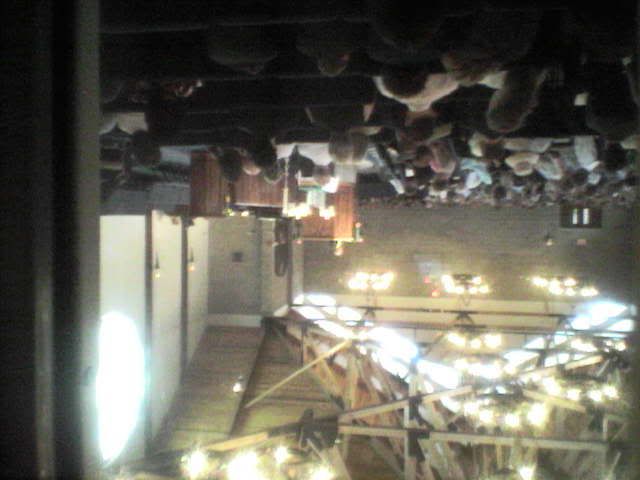
The Kelley family spent the July 4th weekend in Florida visiting family. In what has become somewhat of a tradition whenever we go to Florida, we visited St. Andrew's Chapel, where Dr. R.C. Sproul is the "Minister of Preaching and Teaching."
On the cover of the program of St. Andrew's Chapel, these words are written:
"We cross the threshold of the secular to the sacred, from the common to the uncommon, from the profane to the Holy."
If anything, the trend in our day is to make the sacred secular, the uncommon common, and to profane the Holy. Just look around and it won't take you long to find an example. For instance, we have a church in our area who's members wear t-shirts around town that say "These are my church clothes." This, I suppose, is their way of poking a thumb in the eyes of legalists. But I think it also demonstrates how this church might have lost sight of the fact that a worship service (if it truly is one) is something special; something worth changing their clothes to attend.
A worship service at St. Andrew's is truly a wonderful experience. The high liturgy of the service is awe inspiring. Everything is done with purpose and with excellence unto God. The music inspires the mind and moves the soul. The hymns are deeply theological, not happy clappy fluff with no substance. There are no hippies with guitars, nor do they sing 3 mindless lines over and over in order to "pump and prime" the crowd.
The reverence in the room is amazing. Unlike anything I've ever experienced. The exposition of Scripture, verse by verse, is something that is esteemed vitally important and central, not simply a means to an altar call. It's almost like stepping into another world: a world that hasn't been effected by the revivalism, humanism, anti-intellectualism, and pragmatism that has conqured so many Evangelical churches of America.
Another recent visitor to St. Andrew's is Brandon Vallorani of American Vision Ministries. In an article published today, he wrote about his visit:
"We began our week by worshipping at St. Andrew’s Chapel in Orlando, where we heard Pastor R.C. Sproul deliver a striking sermon on Matthew 16:19. The reverence and majesty with which God is worshipped at St. Andrews stands in sharp contrast to much of what passes as “worship” in the contemporary church today. Every detail from the architecture to the liturgy reflects an appropriately high view of our Heavenly King. While there’s still an opportunity, I encourage all of you to make your way to R.C. Sproul’s church on the Lord’s Day and experience this taste of heaven for yourselves."
In closing, I think it's disturbing that Christians in our day want to bee-bop up into church with a "Jesus is my homeboy" attitude. The Lord isn't our "homeboy," He's the King of Kings and Lord of Lords. They forget that the God they claim to worship is the one who struck down Aaron's sons for offering "strange fire" that He did not command.
After each of my visits to St. Andrew's Chapel, I've always left longing for more. I come away with a vivid reminder that worship is all about God. If you ever get a chance to go to the Orlando area, take a ride up I-4 to Sanford on a Sunday morning. Visit St. Andrew's Chapel. You'll be blessed.
(I took this rather poor quality picture of Dr. Sproul preaching with my cell phone camera from inside the "cry room" where I was with my baby boy.)
Sunday, July 13, 2008
What's Depraved? (Reprise)
Continuing the discussion from the previous thread and post I thought it might be ripe to reference Edwards more completely concerning the imputation of Adam's guilt as congruent with the depraved nature.
What is evident, as Edwards points out, is the condition of man is that of unrighteousness at conception. Unrighteousness he posits is the negative principle. That is, when God removed the constraining influence of the positive, the righteousness of the will of God, man was then left to his own natural propensity to self-love but without the highest regard in self-love which is the love of God. It then is resolved that evil is no positive influence created by God in man but is rather the result of the negation of righteousness.
Evil in man is still, as Edwards would confirm, a reality, a thing which is created, but through negation. God does not need to place in man evil created ex nihilo, but merely to withhold his favor and evil is without the will of God that which wills its own. His favor is that constraint which is called the righteousness of God, or his will. It is not the will of his creatures, firstly, as derived from them, for what is the clay? Man's nature is as a river, the heart of a king in the hands of God, and water by its nature flows according to the constraint of the course set by the banks. Can man make God to see? Who has been God's counselor? None. It is God who has made man and the eye and given it sight to see. And more than that, he has given all that can be seen. All things, purposes, plans and means are from his hand. The negative principle does not mean that the nature itself is evil created, rather, that by the negation of the positive influence of righteousness in both nature and mind, that which was created good, and fit, does by its own tendency bend toward its own destruction being left without the unifying principle of the law of righteousness. Further, the whole creation was subjected to sin and the like principle known in physics, according to its natural bent, finds its terminus via the law of entropy in chaos.
Adam's action is not alone, nor at first where guilt resides. It cannot be, for even the "good" acts of fallen man are accounted as evil. Guilt was by imputation. It is the judgement of the righteous God who cannot abide with unrighteousness. Indeed, guilt as Edwards describes, is congruent with the nature of unrighteousness. By imputation of guilt, then, we have a legal decree, the finding of God which is assigned, not to the act, but to the individual who acted and that because man who acts is one with his nature which acts in the totality of the being. Adam's sin then is not like ours seeing as he had the righteousness of God constraining his actions and was innocent in the beginning. What we know is that he was deceived into believing that the action that he would take was righteous.
Our first exposure is in Genesis 3, and Paul tells us in Timothy as confirmation that the woman is not allowed to teach the man to reflect the original order of creation, and, to remind us of the deception that was first in Eve, who being in transgression taught her husband. Further, that he was cursed because he both listened to his wife and ate. Genesis says that Adam listened and that it was the woman's voice he heard. Adam was made first and from him is derived the woman whose position is not the dominance of her will over his, but is to be in submission to his headship, i.e., his will as a help fit for the purpose. Adam reversed the order by submitting himself to her in violation of the type which is the order of creation, itself the reflection of God's headship and his will as the primary source of will in man. When Eve fell, the conclusion is that Adam also, being one flesh, fell with her. Even though she ate first, the guilt is imputed to Adam as her head. That is the reality, for in Adam, all sinned, including Eve even though it was she and not he who first sinned. The offense Godward is to make God over into the creatures image, reversing the order or creation, now corrupted by that which opposes the will of God, exalts the will of man, and supresses the truth in unrighteousness. It is to do what Satan intimated, to make God to be unrighteous and ascend to equality with him, even above him.
One must consider that the evil tendency (the negation of righteousness) was not in Adam, nor in Eve from the creation, contrasted to James who locates it in fallen man, and not external. Rather, they were created in holiness in the image of God. The evil resided outside of them in an influential spirit called the Serpent of Old, or Satan, who Scripture declares as being what he was from the beginning. His influence was directed toward the mind and not the nature of man which was righteous. The mind operates under the influence of the nature unless some other influence impinges upon it. Unlike we who have inherited both the guilt and corruption, the faculties of Adam's mind had not yet been infected with thoughts directed only toward self-love to the negation of love of God resulting in chaos. Theirs was a righteous nature and beside it was given a righteous commandment, another influence, to guide the mind. So we have the statement that Adam's sin was not in the similitude of the many sins of his posterity. We sin because the corruption that was introduced into Adam by deception (a contradiction of the commandment) is passed along to us and resides in us. To that effect, God has assigned to man the stature of unrighteousness, removing from him the constraints of God's will which is righteous. The effect of Adam's guilt was sealed to him by God's imputation of guilt and the removal of righteousness which leads to life, simultaneously. The result was that Adam became the condemned according to his nature. We then have the history of Scripture and of all mankind, that the likeness of Adam is now transferred to his posterity rather than the likeness of God. Such that, the unrighteousness that was imaged by Satan in the Garden, Jesus assigns to man. To that end, man is continually attempting to make others over into him own image just as his father the devil did.
I will add this paper also.
As Shedd says, the reality of sin is far deeper than the superficial reality that guilt inheres in actions alone as the Arminian would propose. Guilt inheres in the nature. Nature permeates the entirety of our being. But some will say, then how was Adam accounted guilty? Was it not in the action? Again, I say, no. Guilt has to do with the declaration of God as Judge, just as righteousness has to do with God's declaration of righteousness which is foreign to man, an action outside of himself given to him. Man was not in the beginning neutral having both tendencies, therefore guilt was external to him for unrighteousness was not in him. Guilt inheres in nature precisely because God has declared the nature to be unrighteousness, not merely in an abstract way, but in truth, man has been "unrighteoussed." So also, the guilt is imputed congruently with depravity. "In the day you eat you will die." Not, in the day you eat you will become guilty, then later die. But, at once, simultaneous. "In the day" is colloquial meaning at the point of time. So later, we have Scripture using the term judgement to connote both the passing of the sentence and the execution of it as simultaneous though temporally expressed. To our feeble minds we see things from a temporally bounded perspective. But, the reality is that though man is born with an unrighteous nature and will proceed to actual sins, those sins are nothing more than the expression of one thing, sin. And sin is guilty of offense toward the nature of God by its very nature, whether it acts or not.
Man was created in innocence, but not in moral neutrality. He was created righteous. As righteous he could not sin, but God had left the will to its native freedom, being that which chooses according to the highest regard of the mind (in this sense it means volition where Shedd rightly uses Will to mean essential being or nature and all the attributes of it including its actions). It was there, in the mind, that deception entered,
"So when the woman saw that the tree was good for food, and that it was a delight to the eyes, and that the tree was to be desired to make one wise, she took of its fruit and ate, and she also gave some to her husband who was with her, and he ate."To this Jesus adds, what a man desires in his heart, that is what he is. So that, a man lusting after a woman has already committed adultery. It does not become sin in action but in conception (the woman saw), and conception is accomplished in the inmost place where no one knows. The entrance of the deception was below perception, precisely the definition of deception. Then, it was at the point that Eve saw, that it was concluded that she had already eaten. The corruption though entered in disguised as a beautiful creature. This does not take genius, just attention to the texts. It was by imputation, in other words, by the introduction of the lie, beyond the view of consciousness, that she was corrupted, and obviously that without her consent for no true consent is given to a lie.
The text tells us that their eyes were opened, but what it means is that their eyes were closed, blinded by the darkness that had entered and they had chosen over the light. They saw themselves as naked, where God saw them as he had clothed them. Who said they were naked? Not God. Nakedness to them became shame but it was not so, God had clothed with righteousness and nakedness was what he had clothed them with. As we can see, the doctrine of imputation is demonstrated in Satan's very actions. For it was he who introduced deprivation into Eve and she into Adam. The deception itself is guilty. The corruption itself, at once the judgement, death sentence and execution. Through Adam we have, as Scripture declares, received God's curse, he having concluded that we were all in Adam, the whole of creation, subject to sin. Which is of course the truth even though the action of our birth had not yet occurred. Therefore David says he was conceived in sin. Not his, but his by imputation and that by the negation of righteousness as a result of the curse upon Adam's kind.
Guilt then is at once congruent with and consequent of depravity. That depravity is primarily the deprivation of righteousness. It is deprivation of righteousness in nature, nature being that which permeates the entire being, body, soul and mind. Righteousness itself cannot abide with any kind of sin, whether of nature, or of the actions of mind or body. In the entrance of sin into the world, God withdrew himself by removing the righteousness which constrains the will to love of God alone. Later we see this in the veil. It is not man who has placed the barrier to entrance between God and man, (see the Garden event), but God. In fact by God's action God prevents man from doing so by the unrighteousness of man's own will. In the reconciliation that is in Christ, that veil is removed to the glory of God, through Christ's flesh, through the imputation of Christ's righteousness, effectually securing regeneration in the elect so that they can enter. Christ, who has put to death sin in his flesh has reconciled them to God in himself for the benefit of the elect and secured them forever by the vital union of the Spirit. But, no sinful choice can enter and no sin nature would will itself to, either.
As Shedd concludes, this is the great rift between one set of theologians and the other. What was begun in the Reformation was a return to the doctrine of original sin and clearer understanding than that which was held by the Pelagians of all types who rejected the doctrines of the Protestation both before and after Luther. This is what separates us, today. Misunderstanding the doctrines of the fall is the seminal beginning of all errors and offense against the doctrines of grace. The Arminian faction would contend against Shedd's statement:
"The prayer of David is the proper prayer for us to the lay of our death:Far then from being that it is only the conscious sin that it under the guilt of condemnation, David is repeating what he had learned by the Law, as well from his own innate sense. We must remember that the Law was added because of transgression not transgression because of the law, even though the law would produce the effect of making sin recognizably, exceedingly sinful through the unavoidable violation of it."Search me, O Lord, and try me, and see what evil ways are within me; cleanse Thou me from secret faults."A prayer, it may be remarked, that is utterly unintelligible on the hypothesis that there is no sin deeper than consciousness."
Let's not forget that we wage our war not against flesh and blood but against every lofty thought that exalts itself against the knowledge of God (my compilation). It is not individual Arminians, or Romanists, or any other people of Pelagian persuasions who are the real enemy. And each of us shall give an account of himself to God. Our challenge is to declare the truth and let the sword of his word divide that which is his from that which is not. It is not a new battle and all of the elect at first fight against the kingdom of God until they finally hear, "Do you kick against the goads?" I did, for I did not begin completed with this knowledge, nor have I yet arrived at a full understanding of it. Like the disciples we all believe ourselves the possessors of our own destinies at first self-assured that we have found the way until we hear the Lord say, "You have not chosen me, but I have chosen you."
With Isaiah let's us declare as we come into the presence of God, "Woe to me, for I am undone," recognizing that sin is the un-doing of God's will in man, of which we are all guilty. Humanistic concepts of will as mere volitions of single choices do not go deep enough into the soul well of depravity. Instead, rightly defined, Will is the entire being according to Shedd's usage as expressed by Isaiah's totally coming apart in the presence of the Lord, peirced to the deepest part, divided soul and spirit, searched in the inmost being, where secrets of the hearts of men so desperately wicked that no man can know it, reside. That depravity is not found just in the foaming of the surface waters, nor in the merky deep and darkness below, but issues forth from the very sping of its existence. A Reformation understanding then, is not that of the will as a ready instrument wielded distinct from self, but Will is the wielder, himself. Will is what Shedd says, in concert with Edwards, man is, and man is born bound by a creature's nature, a child of wrath, exhaustively unrighteous, thoroughly.
So we do not speak a common language when speaking of will. For we do not mean mere volition as the Arminian formula would have it. Rather, we speak of that which is reflective of the whole image of God into which we were created. It follows then, we also have a greater appreciation of what it means to love the Lord God with the whole mind, the whole soul, the whole spirit, the entire substance of our being and not just our volitions, and then why it is that total depravity is the only other reality, and being sin, stands guilty of hating God with its entire being and not just the actions that flow from it. Knowing this, we also gain a deeper appreciation for repentance, and forgiveness, for those who love much have been forgiven much by he who has become sin for us. With Isaiah we know our native state, but also who it is that has given us the righteous confession of the lips that comes from the throne of God.
Sunday, June 22, 2008
The Root of the SBC's Problems

For more on that, please read:
Southern Baptists, An Unregenerate Denomination, by Jim Elliff
(This might explain why there's so many liars in church leadership positions as well!)
Saturday, June 14, 2008
Conflict Avoidance: Virtue or Vice?
Many Christians today are way too obsessed with worrying about offending sinners with the true Gospel. They'll do anything and everything to keep from "offending" sinners. In some churches, the gospel has been transformed into a fairytale that I am convinced the Apostle Paul would call "another gospel."
There are pastors out there who portray God to be some sort of cosmic tooth fairy; or perhaps a divine Santa Clause that bears little resemblance to the God of the Bible. They preach a Jesus who doesn't call men to repentance. Instead, they preach a Jesus who's out to get everyone to hold hands and sing Kumbaya.
Is the modern obsession with avoiding conflict with the world really a virtue? Or is it a vice?
R.C. Sproul has written:
Martin Luther once remarked that whenever the gospel is preached in its purity, it engenders conflict and controversy. We live in an age that abhors controversy, and we are prone to avoid conflict. How dissimilar this atmosphere is from that which marked the labor of Old Testament prophets and New Testament apostles. The prophets were immersed in conflict and controversy precisely because they would not accommodate the Word of God to the demands of a nation caught up in syncretism. The apostles were engaged in conflict continuously. As much as Paul sought to live peaceably with all men, he found rare moments of peace and little respite from controversy. (Willing to Believe, pp. 19-20)
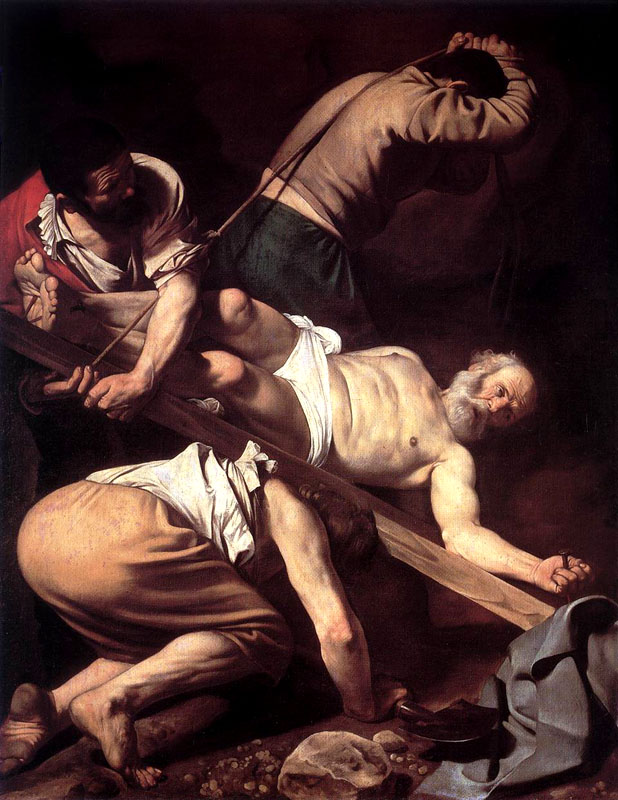 I know it's common for us to look at the book of Acts and think "oh, if we could just be a church like that," but do we really want to be that kind of church?
Sure, we may desire to see large numbers of conversions and perhaps even a few miracles, but what about the conflict that came along with it?
What about the riots? What about the persecution? The Martyrdom?
Can we really be like the church in Acts and expect everything to be hunky-dory?
Do we honestly believe we're better -or any less expendable- than the prophets and apostles?
I believe that most of the downgrade in American society is mainly due to the fact that the church has lost it's influence. The Church Militant has decided to become a bunch of sissified pacifists. The salt has lost most of its savor. The light has been eclipsed by the bushel of compromise.
Instead of fulfilling it's mandate to preach the gospel to sinners and disciple the nations, the modern church is too busy trying to cater to them. Many churches have only one thing in mind: making the Christian faith more palatable to the sinner in order to grow larger and larger.
To answer the question I posed above: I believe the modern church's obsession with avoiding conflict at expense of the truth is a vice, and certainly not a virtue!
Please understand, I'm not advocating being obnoxious. I'm not calling for Christians to be inhospitable to the lost. Rather, I'm calling for ministers to preach repentance and faith; for Christians to declare the whole council of God in our homes, our local churches, and in the civil sphere. I'm calling for Christians to once again consider what glorifies God in a worship service, instead of what entertains sinners.
If we do these things, we'll probably see some conflict, but with the conflict, we might just see a great revival.
Sunday, June 1, 2008
Saturday, March 29, 2008
A. W. Pink on the Modern God

I recently obtained a copy of A. W. Pink's book The Attributes of God. Yesterday I was skimming through the chapters and I came to the Pink's chapter on the Supremacy of God. The following comes from the beginning of that chapter. It really struck a chord with me because this is the very thing I believe is wrong with the "majoritartian" view of God in the SBC and other movements in our day:
Photo Credit: Providence Baptist Ministries website"In one of his letters to Erasmus, Luther said, "Your thoughts of God are too human." Probably that renowned scholar resented such a rebuke, the more so, since it proceeded from a miner’s son; nevertheless, it was thoroughly deserved. We too, though having no standing among the religious leaders of this degenerate age, prefer the same charge against the majority of the preachers of our day, and against those who, instead of searching the Scriptures for themselves, lazily accept the teaching of others. The most dishonoring and degrading conceptions of the rule and reign of the Almighty are now held almost everywhere. To countless thousands, even among those professing to be Christians, the God of the Scriptures is quite unknown.
Of old, God complained to an apostate Israel, Thou thoughtest that I was altogether as thyself. (Ps. 50:21). Such must now be His indictment against an apostate Christendom. Men imagine that the Most High is moved by sentiment, rather than actuated by principle. They suppose that His omnipotency is such an idle fiction that Satan is thwarting His designs on every side. They think that if He has formed any plan or purpose at all, then it must be like theirs, constantly subject to change.
They openly declare that whatever power He possesses must be restricted, lest He invade the citadel of man’s "free will" and reduce him to a "machine." They lower the all efficacious Atonement, which has actually redeemed everyone for whom it was made, to a mere "remedy," which sin-sick souls may use if they feel disposed to; and they enervate the invincible work of the Holy Spirit to an "offer" of the Gospel which sinners may accept or reject as they please.
The "god" of this twentieth century no more resembles the Supreme Sovereign of Holy Writ than does the dim flickering of a candle the glory of the midday sun. The "god" who is now talked about in the average pulpit, spoken of in the ordinary Sunday School, mentioned in much of the religious literature of the day, and preached in most of the so-called Bible Conferences is the figment of human imagination, an invention of maudlin sentimentality. The heathen outside of the pale of Christendom form "gods" out of wood and stone, while the millions of heathen inside Christendom manufacture a "god" out of their own carnal mind." (A. W. Pink: The Attributes of God. Chapter 5)
Subscribe to:
Posts (Atom)

 Posts
Posts