The Biblical pattern of Receiving, then Losing, then Receiving Again the Word of God, and how this ought to inspire our prayers for Revival and Reformation.
Monday, June 30, 2008

Thursday, June 26, 2008
Arminianisms and Hobbs
Saturday's post brought up one of the more troubling features of modern-day Arminianism - that it is often, especially in its more educated and influential advocates, highly philosophical rather than founded in the Bible.
J.I. Packer wrote an excellent article, originally a paper at the 1968 Puritan Conference, entitled 'Arminianisms' . In it he distinguishes between different strands of Arminian theology, principally the Wesleyan type and the more philosophical and rationalistic type taught by the Remonstrants (those expressly condemned at Dort). It sounds like Hobbs falls into the Remonstrant or rationalistic category - I note how his theology seems a massive logical and philosophical construction rather than being firmly rooted and grounded in the Scripture. It was this sort of Arminianism that led the old English General Baptists into Unitarianism in the eighteenth century, and the Wesleyan or evangelical type was the basis of the formation of the New Connexion of General Baptists by one of Mr. Wesley's converts. These two versions of Arminan theology are significantly different.
Rationalistic Arminianism was the basis of the old English General Baptists, as I have said. This body was always smaller than the Particular or Calvinistic Baptists, and its theology left it wide open to the killing influences of the 18th century enlightenment. The result was all too plain. An example of one of the old General Baptist Churches can be found here, at Chatham in Kent. Another is here, at Godalming in Surrey. Yes, they went Unitarian. A few were saved through the work of evangelical Arminians, but as a rule in Kent, Surrey and Sussex in particular, where the General Baptists were strongest, the old General Baptist churches are now Unitarian where they still exist at all. Presbyterian churches like the Octagon in Norwich had first embraced Arminianism before they abandoned the deity of Christ for Arianism, then Socinianism. It is indeed a form of liberalism and assumes that man as man is able to respond to God of his own ability.
Wesley taught a fairly robust doctrine of total depravity, as will be seen by any who care to read his answer to Dr. Taylor of Norwich on the subject of Original Sin. Taylor was a Socinian, a rationalistic unitarian who was the pastor of the Octagon Chapel, Norwich (indeed the Octagon was built for him). Thus Wesleyanism set itself against the Rationalistic Uniarianism that had captured the English General Baptists. Wesley taught substitutionary atonement (inconsistently), and his theology was in general founded on the Bible, not philosophical speculation. Unfortunately many who followed Wesley fell into the same errors that the Remonstrants had, leading to today's liberal Methodism.
Wesleyan Arminianism, as Packer noted, contained a lot of its own antidote. Hobbs' Arminianism is a long ay down the path that leads to the Octagon Chapel's doors. John Wesley noted that the Octagon was the finest chapel in England: "But who can think that the plain old Gospel should ever enter here?"
"Hath not God made foolish the wisdom of this world?"
Now, as I have criticised Packer elsewhere for his stance on co-operation with ritualists and Romanists, I commend 'Arminianisms' to all our readers.
Wednesday, June 25, 2008
Musical Interlude featuring Lynyrd Skynyrd
This song is dedicated to people in church leadership who just cannot seem to tell the truth about much of anything...
Sunday, June 22, 2008
The Root of the SBC's Problems

For more on that, please read:
Southern Baptists, An Unregenerate Denomination, by Jim Elliff
(This might explain why there's so many liars in church leadership positions as well!)
Saturday, June 21, 2008
The Image of God in Man According to H. H. Hobbs
Only of man is it said that he was made in God's image. Since God is Spirit, this image relates to man's spiritual nature. This divine image means that God created man with a rational, emotional, and moral nature. He possesses a will with the freedom of choice. In his original creation, man was in a state of innocence with the possibility that he might choose righteousness or sinfulness, pg.51 TBFAM, c. 1971.
It cannot be mistaken that Hobbs intends in this quote to establish that God's image is being described. Hobbs states three times that it is. He then defines it. So, it is that definition that we will look at. It is actually a single thought. God is moral with will; free to choose good or evil. As I discussed before, the innocence of God in Hobbs finds its establishment in the "first choice" that God made. Hobbs defined virtue as that which must proceed from choice. Innocence is neutrality then; having done neither good nor evil. It was discovered that the first action of God was to establish laws outside himself that he could possibly violate.
It is here that we encounter a problem with Hobbs' Theology. God is transcendent, not just timeless. Time has no reference in God who is eternal. The problem then is how does it eventuate in God that an action happens. Time is bound in creation. In God time is seen as complete just as all that is in God is a simplicity. Each attribute and characteristic of Deity is at once and One, not without the others. He is not a complexity; he is undivided perfection of perfections. Time is complete in the mind of God just as a line does not proceed from point A to point B but is AB. It conjoins logical order. At the same time, however, God does not comprehend it in process moving from A to B. The result of process is time and as I said time is within creation, bound by it, and more specifically, the resultant of an object's (created matter) motion in space.
Then we can see the dilemma. If God is a moral agent in the same way that man is, then God is not Spirit, but has a body which traverses distances. That is not the case as Hobbs himself admits, "God is Spirit." God cannot change and so there never was a "time" when God was merely innocent and by action chose the good, gained virtue and became righteous. But, this is the moral agency that Hobbs has introduced in God's image in man.
I will digress a short bit to examine man again in the original creation. If in God there was no time in which he was not righteous, and he being the perfection of perfections created man in his image, then man was not innocent. Here again I remind the reader what Hobbs' definition of innocence is:
Created in a state of innocence, man was neither righteous nor sinful. Before becoming either he must exercise the right of choice, hence the temptation experience... pg. 51-52Of God Hobbs' states:
Thus the "righteousness of God" is not an attribute of God, but an activity... pg. 59; This is God's self-affirmation...connotes what God is in his nature, pg. 37; ...God has placed certain limitations upon himself...to act as he wills in keeping with his own laws and accordance to his nature as righteousness... pg. 66.This may seem confusing, and I agree, Hobbs was confused. As was discussed in the last post on this subject and furthered here, Hobbs proffers libertarian freewill in God and by doing so confuses the eternal righteous nature of God with action. He said:
He is active, progressive, free to choose... pg 36.When put together, eternality becomes something quite different in Hobbs than in Scripture. His image is of a changing God, whose methods change and God is seen in reference to time, viewing the creation as an externality, progressive, because the nature of God is itself internally progressive and time bound in some unexplained way such that God has the power of contrary choice so that he might attain virtue (righteousness). Hobbs' said, "Created in a state" and we do not have to look far in Scripture to see that the "state" was the image of God and is exactly what Hobbs meant.
But, is that the way man was created? Scripture reveals that man was created good and in the image of God who is eternally blessed; the perfection of perfections, the Highest Good. Created with rationality and able to understand right from wrong, man was created without the power of contrary choice. He was created with a nature that was good (righteous) and in the creation each kind produces only after its own kind. His mind was perfect in order that he might bring glory to God. Genesis three tells us that man was deceived. How could that be?
Unlike God, who is Good and the perfection of perfections, man is a created being and all that does not apply to God, applies to man. That is, man is time bound, progressive and changeable. He is changeable by the very nature of what it means to be created. The confessions of the past say things like malleable, unstable and so forth to express the idea that man can change. Being a rational creature, Satan did not approach with contrary choice. He did not present "evil" to Eve, but good. He did contradict God and challenged the veracity of God's Goodness. That is the whole point. What first appeared as right became wrong and wrong became right. Eve chose what she saw to be good, perfectly in keeping with what God had created her to do. In opposition to what libertarian freewill would postulate, Eve's will was bound to choose the good. The natural liberty of the will inheres in the very nature of will, but not in the nature of the mind, for it was founded rationally sound, nor of the righteous nature of man's spirit into which he was created for what fellowship has unrighteousness with righteousness. The power of contrary choice does not enter in until the fall, being the very nature of Satan to contradict what is good by lies. And, again in the new creation, man's will is fixed, not by the inherent nature of the will which naturally is free, but by man's new spiritual nature and mind. And more, those have been sealed by union with Christ through the gift of the Holy Spirit and are incorruptible. It was the mind that Satan attacked proposing "good". The spiritual nature of man which was righteous and her perfect mind are what bent the will to chose to eat of that knowledge of the fruit of good and evil when she was convinced that it was good to do so.
Following what Hobbs has said, it is logical but against what Scripture says. Hobbs says on page 52:
In her innocence the woman showed her tendency toward righteousness by protesting on behalf of God's purpose.Now this would be fine if indeed Hobbs believed that righteousness was the eternal nature of God and that man had been created after that image so that only good flows from it. But, Hobbs furthers his thesis on page 53:
It is when man through selfish ambition seeks to be God in his own life and will that he sins. It was this very thing which snared Eve, which shows that she also had a tendency toward sin. And this tendency overcame her tendency toward righteousness.
There we have it. The image of God in man according to H.H. Hobbs is man created with a nature that possessed innocence and the tendency to do either good or evil. This neutrality is necessary for the preservation of LFW of which H.H. Hobbs was a proponent, solidly; Pelagian in his creation scenario, semi-Pelagian in his post-fall view of man. And, like most Arminians, he contended of necessity that Christ died for all to restore to man that ability to choose righteousness or unrighteousness. Which in effect, through prevenient grace, balances the scales as if to make man innocent once more, the Pelagian man, needing only to choose Christ to be righteous. As before, this inverts the image, placing righteousness as the outcome of choice rather than the cause of it.
According to H.H. Hobbs, God created man in God's image, both good and evil. Such is the basis of the Arminianism among the Southern Baptists. As a SB I studied Hobbs twenty years ago and had no idea what it really meant. Where were those who did and should have taught me? That is a generation and now it has been nearly two since his book was printed. That is not all of it. For a century this theology has dominated the SBC landscape. To wit, my former pastor and his assistant both held that God was both good and evil or at least capable of it for with God all things are possible and you don't want to put God in a box... Adults who sat in Sunday School with me were convinced that Adam and Eve both were endowed with pride-filled lust as Hobbs describes. When challenged, many Southern Baptists will see this as offensive to their own knowledge. The repugnance of the concept of God being anything but Good is revolted against by the Spirit in them. Still, the scope of the influence of Hobbsism is vast. Try mentioning that a heretical view has been taught in the SBC for one hundred years, that a former President wrote the systematic Sunday School materials that indoctrinated tens of millions, and you'll be ananthematized as a heretic yourself. None one touches the icons in the SBC, be they men or myth.
In the long running debate between the Arminianism and Reformed/Calvinism, this is where the Arminian perspective leads. LFW will create the Force, but it cannot reveal the God of Creation. And, it destroys any hope of a righteousness which is revealed from heaven, and given to us in the person and work of Jesus Christ our Lord and Savior.
Wednesday, June 18, 2008
The Whole Enchilada
Here's a link to a huge debate that went on between the Triabloggers and Victor Reppert.
There's hours and hours of Calvinism vs. Arminianism all on one page.
Enjoy!
Saturday, June 14, 2008
Conflict Avoidance: Virtue or Vice?
Many Christians today are way too obsessed with worrying about offending sinners with the true Gospel. They'll do anything and everything to keep from "offending" sinners. In some churches, the gospel has been transformed into a fairytale that I am convinced the Apostle Paul would call "another gospel."
There are pastors out there who portray God to be some sort of cosmic tooth fairy; or perhaps a divine Santa Clause that bears little resemblance to the God of the Bible. They preach a Jesus who doesn't call men to repentance. Instead, they preach a Jesus who's out to get everyone to hold hands and sing Kumbaya.
Is the modern obsession with avoiding conflict with the world really a virtue? Or is it a vice?
R.C. Sproul has written:
Martin Luther once remarked that whenever the gospel is preached in its purity, it engenders conflict and controversy. We live in an age that abhors controversy, and we are prone to avoid conflict. How dissimilar this atmosphere is from that which marked the labor of Old Testament prophets and New Testament apostles. The prophets were immersed in conflict and controversy precisely because they would not accommodate the Word of God to the demands of a nation caught up in syncretism. The apostles were engaged in conflict continuously. As much as Paul sought to live peaceably with all men, he found rare moments of peace and little respite from controversy. (Willing to Believe, pp. 19-20)
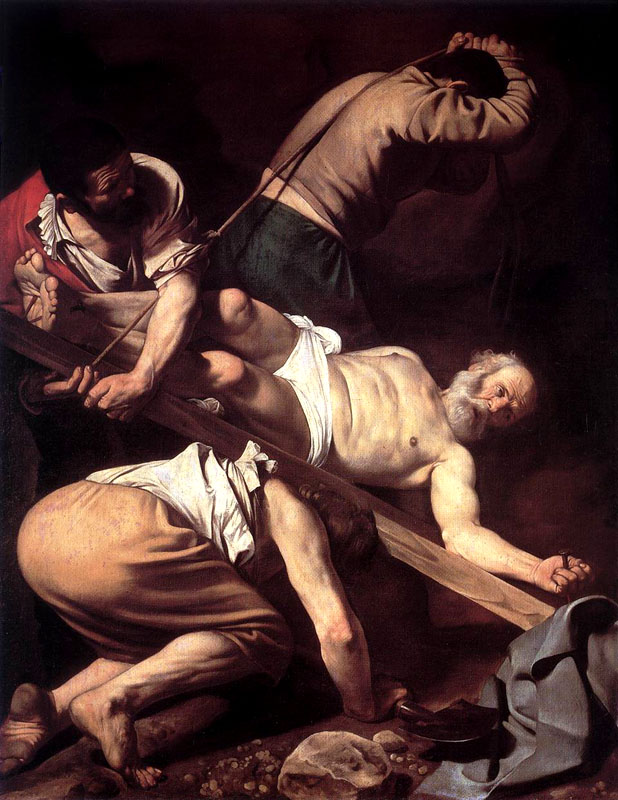 I know it's common for us to look at the book of Acts and think "oh, if we could just be a church like that," but do we really want to be that kind of church?
Sure, we may desire to see large numbers of conversions and perhaps even a few miracles, but what about the conflict that came along with it?
What about the riots? What about the persecution? The Martyrdom?
Can we really be like the church in Acts and expect everything to be hunky-dory?
Do we honestly believe we're better -or any less expendable- than the prophets and apostles?
I believe that most of the downgrade in American society is mainly due to the fact that the church has lost it's influence. The Church Militant has decided to become a bunch of sissified pacifists. The salt has lost most of its savor. The light has been eclipsed by the bushel of compromise.
Instead of fulfilling it's mandate to preach the gospel to sinners and disciple the nations, the modern church is too busy trying to cater to them. Many churches have only one thing in mind: making the Christian faith more palatable to the sinner in order to grow larger and larger.
To answer the question I posed above: I believe the modern church's obsession with avoiding conflict at expense of the truth is a vice, and certainly not a virtue!
Please understand, I'm not advocating being obnoxious. I'm not calling for Christians to be inhospitable to the lost. Rather, I'm calling for ministers to preach repentance and faith; for Christians to declare the whole council of God in our homes, our local churches, and in the civil sphere. I'm calling for Christians to once again consider what glorifies God in a worship service, instead of what entertains sinners.
If we do these things, we'll probably see some conflict, but with the conflict, we might just see a great revival.
Subscribe to:
Posts (Atom)

 Posts
Posts