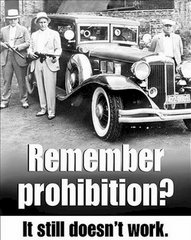
Some of the theological elite (i.e. ministers of cultural retreat) have been critical of the reaction of rank and file conservative Christians to Phil Robertson/A&E debacle. They say we should hold our fire defending the duck man; wait for more important battles in the future...
If the highfalutin types are always retreatin' like the Brits at Dunkirk over matters trivial, from whence cometh the notion they'll all of a sudden be faithful in larger battles that lay ahead?
They won't I tell you. Because they have neither the courage nor the desire.
Douglas Wilson hits it out of the park here:
The Scars on your Forearms, by Douglas Wilson
Sunday, December 22, 2013
Wilson wants to see some scars on their forearms.

Saturday, December 14, 2013
Steve Wilkinson on the ErgunCaner Debacle
The Mafia recommends you go read Steve Wilkerson's article on the Ergun Caner debacle:
Integrity and Christian Apologetics: An Ergun Caner Case Study
Saturday, December 7, 2013
Peter Hammond on Nelson Mandela
As the world and even a few notable Reformed thinkers mourn and talk of how great a man Nelson Mandela was, we at the Reformed Mafia will not be singing his praises. In fact, we would like to share a couple of videos with you from a brother in South Africa who isn't paying homage to the terrorist.
We hope you will listen to Dr. Hammond's perspective and not fall for the politically correct propaganda:
Thursday, December 5, 2013
Ergun Caner Appointment to Brewton Parker College
The Mafia has been laying low for several years, but the recent news that Ergun Caner was selected to lead a Baptist college (which is located not far from where I presently sit) has prompted me to return to the blogosphere for a brief time. It's quite disturbing really to see how so-called men of God are circling the wagons in defense of the indefensible.
It is a matter of fact and public record that Dr. Ergun Caner is an unrepentant, pathological liar who has done much harm to the cause of Christ, especially in regard to the ministries of those trying to reach Islamic people.
Some claim that people like me oppose Caner because of our disagreements over theology. Such is not the case. If this was a merely a difference of opinion over theology, I would be the first to welcome Dr. Caner to our area.
I am posting a video here that needs to be seen by all who care about the truth. You'll want to fast forward to about the 24 minute mark where the presentation begins.
Saturday, February 7, 2009
So Long for Now
Well everyone, this is it. The journey has come to an end. There just comes a time when you realize you have too much on your plate. I appreciate everyone who's been a part of this and even those of you who've written against us.
This blog will remain up and Gordan and I will remain co-owners until we decide to recycle it, kill it, or auction it off to the highest bidder.
The only blogging I am doing now is about whips and whipmaking. Come by and see me some time.
I covet your prayers.
Semper Reformanda!
-Rhett
Monday, February 2, 2009
Gordan's Gone
Hey, just a quick note to let you know that I am begging off of blogging for the foreseeable future. Many of you know (more of you don't) that I had a novel published in 2000. Well, I've been bitten by that bug again and now must pursue the path of writing another. I don't have a lot of control over my own creative juices: you've kinda got to go with the flow on these things, I've learned.
But even before I begin to pursue another book-writing, I'm already stacked to the gills with time constraints and ministry responsibilities, so something's got to give. This time, that something is the internet in general, and the blogosphere in particular.
I believe Rhett is going to come on here shortly and make an announcement along similar lines with regard to the status of this blog, so I will simply sign off with the prayer that our great Sovereign may continue to bless you with an ever-increasing knowledge of the truth, as it is found in the face of our Lord Jesus Christ, to whom be the glory forever and ever. Amen.
Monday, January 19, 2009
Wednesday, January 14, 2009
Sanctification Question
Here's the scenario.
A young man comes to you and confesses that he is in bondage to something addictive (whether drugs, alcohol, sex, pornography...whatever.)
He is in distress and near despair because of his lack of victory in this area.
He is a confessing Christian, and aside from this confession, has never seemed to bear the fruit of a false convert. There's nothing you've observed in his life that would've led you to suspect that he's anything other than a growing, though imperfect, sincere believer in Christ.
Now that he's laid bare his soul to you, his desire is freedom from this sin.
What is your counsel?
(The reason I ask is because I was "raised" as a baby Christian with a Pentecostal view of sanctification, and am interested in other ideas. I'm not so much interested in your theology of personal holiness as I am what your specific counsel to a man like this guy above would be. I'm interested in how the rubber meets the road in your theory of sanctification.)
So...play nice and try to keep responses to something less than thesis-length.
Thursday, January 8, 2009
More Prophecy Stuff at Incrediblog
I'm starting a series on allowing the Bible to interpret itself, even on prophetic matters. I think when most of us settle on a prophetic system that seems to work for us, then that's the one we go with, and it becomes a filter through which we look at all prophecies. But what if the Bible itself demonstrates proper interpretation of prophetic dreams and visions? Hmm.
Tuesday, January 6, 2009
Book Recommendation: RA Torrey's "The Fundamentals"
I have a confession to make. I hate theological liberalism. Look up all the synonyms for "hatred" in your thesaurus, and if you roll them all up into one mega-hate word, and then smother that hate-word in the hottest red chili sauce known to man (y'know, the stuff you have to handle with rubber gloves), well then, that's how I feel about liberalism. And, coincidentally, most actual theological liberals get on my nerves rather quickly.
Having made that confession, I want to say that I got R.A. Torrey's two volume work, The Fundamentals, for Christmas and I am thoroughly enjoying it. It's four books, actually, and each is a collection of essays from various authors.
These books began to be collected/assembled in 1909, as an obvious frontal assault on the then-fashionable liberalism that was coming out of Germany, and beginning to infect Christianity in North America.
As with any collection of writings, some are more helpful than others, so I'm not offering a blanket endorsement here, but generally speaking these are thoughtful essays written by brilliant, well-educated Christian men who hated liberalism nearly as much as I do. (They might leave off the chili sauce.)
The first book is focused on countering the en vogue Higher Critical method, and the remaining three center around theological topics. Some of the names I recognized before I started reading: James Orr, B.B. Warfield, W.J. Erdman, Thomas Boston, H.C.G. Moule, J.C. Ryle, G. Campbell Morgan, C.T. Studd, and Philip Mauro. (I also recognized C.I. Scofield, but I was trying to list the good ones above...)
I have seen this set for sale many times before, but I have passed over it because I had a suspicion that it would be filled merely with the rantings of snake-handlers and those who believe that holiness has something to do with the length of your shirt sleeves.
I have been pleasantly surprised, and quite edified, by this collection. Did I mention how much I hate liberalism?
But here's the thing, the reason why you really ought to consider getting The Fundamentals by R.A. Torrey for yourself: The current Postmodern fad gets all of its theological legwork from the 19th and early 20th Century liberals. The pomo's haven't hit on something new. They're simply rehashing all the same junk that has destroyed Christianity in Europe and brought down all the mainline denom's here. And smarter men than you and I had 'em pegged a long, long time ago.
RA Torrey's The Fundamentals, a two volume hardcover set, can now be had for about fifteen dollars, which is 85% off the original retail cost. Talk about bang for your buck! Very highly recommended.
 | The Fundamentals, 2 Volumes |
Saturday, January 3, 2009
"With Juicy Bits"
For interested folk, I've published a post on the last third of the Revelation, with juicy bits of wild speculation at the end. Enjoy.
Tuesday, December 30, 2008
Why?
When asked why one chooses Christ and another does not the universal answer from the Arminian is because:
When all is said and done your salvation is up to you:
But that is fraught with:
The mystery of human love still baffles minds as unsolvable. Why? What is it that takes the heart and hurls it over a cliff headlong? How is it that such coarse a smith's hand holds a flower's stem and the cold steel voice becomes as soft as petals and as pleasing as lavender in mist?
Just because? It's up to you? We don't know what love is? Nah!
What love is this? It is a love that gives us a new heart which is spread abroad with the love of God:
So it is now my cause to show that this is exactly the same case for those being regenerated. They choose Christ because they have a new heart. I will demonstrate that the choice to believe must spring from a heart and nature that loves Christ if it is to be a faith that is pleasing to Him. Further the prophet Ezekiel said the result of giving the new heart is that is causes his people to walk in His ways. In other words, there is no heat without a fire, there is no sight without an eye; there is no hearing without an ear; and there is no believing without a new heart. Belief is what is required in the New Covenant and belief is what characterizes those who have been born again (1 John 5:1). We believe the gospel because it is now in our nature to love Christ and see his beauty and excellence. Our natural hostility has been disarmed because it was replaced by another affection. Now to all those who choose Christ do so because their new nature compels them to. A regenerate person never resists the desire to believe. He believes because he wants to and cannot do otherwise.
That's what love is.
Tuesday, December 16, 2008
Universalism Squeezing Arminianism
This post from Steve Hays at Triablogue presents an interesting question that I think all synergists (not merely Arminians) need to answer. Read his post. It doesn't start out as an attack on Arminianism, but rather winds up posing some sticky questions re: "evangelical" universalism.
If you're too lazy to read the post, here's the point that is interesting. Universalism is on the rise in modern "evangelicalism" (so-called.) The Universalists use a lot of the same texts to prove their case that the Arminians use to combat Calvinism, texts focusing (supposedly) on God's great desire to save each and every individual. And, it seems, it's the Universalists who take these texts at greater "face value." This highlights the oft-made observation that many of the Arminians proof texts, if they prove Arminianism, really prove more than that: Universalism. (e.g. When the Bible tells us that Jesus is the "savior" of the whole world, on the face of it that would seem to support Universalism more naturally than it would Arminianism, especially when Arminians hold such statements up as proof against the idea of decretal election.)
Since we are graced here with the presence of some thoughtful Arminians and other synergists on occassion, I'm curious what your answer is to Hays' post. And, of course, I'd challenge you to answer him directly. I've got my popcorn ready.
Saturday, December 13, 2008
A Mediocre Review of a Great Book: "Precious Remedies Against Satan's Devices" by Thomas Brooks
Is there a Reformed view of "spiritual warfare?" And if there is, does it differ significantly from the modern, charismatic rebuking-the-devil sort of thing?
The answer to the first question is Yes. Thankfully, the answer to the second question is also Yes. (In the interest of full disclosure, I write this review as a former charismatic, warfare prayin' demon buster. I could cast devils out of just about anything, including stuff you never knew they'd get into. Those were the days, joining hands in warfare prayer around a pallet-full of demon-possessed ceiling tiles... but I digress.)
For my money, the best treatment of so-called spiritual warfare from a Reformed perspective is Precious Remedies Against Satan's Devices, a Puritan classic by Thomas Brooks, published by Banner of Truth.
Here's the shocking, secret weapon of the devil in spiritual warfare, that the typical charismatic completely misses as he's rebuking spirits of hip-hop music in the sound system: The devil wins in spiritual warfare when he can coax God's people into...brace yourselves...into sinning.
Precious Remedies is really like a foot-soldier's field-manual, instructing him thoroughly in the enemy's tactics and how to overcome them. It has spurred me personally to a greater pursuit of holiness. I suspect that was intentional on Brooks's part.
There is one section that some might find controversial, in which Brooks discusses what is often called "besetting sins," or those particular sins, particular to us as individuals, which we seem to struggle with (and lose against) more often than other people do, and more often than we do with regard to other sorts of sin. Mary is known as a gossip, and can't seem to help herself. Joe is famous for his temper, etc. They both hate their "trademark" sin, but seem to be unable to defeat it utterly.
Brooks's somewhat surprising answer to this is that he was unable to find any promise in the Scripture which gave assurance that these sorts of besetting sins could or would be completely annihilated from the Christian life. He goes on to propose some reasons why God may allow the believer to struggle so, reasons that are both thoughtful and redemptive.
The controversy may come as this sort of thinking meets with a currently popular answer to the same topic. This other answer is: "Stop that! Cut it out! You are probably not saved if you continue to struggle with this one thing and can get no lasting victory over it. Etc." Brooks was unwilling to paint things in such stark black-and-white on that one. Whether you wind up agreeing with him or not, the discourse is worth reading.
For my money, the best way to get your hands on Brooks' Precious Remedies is in the first volume of The Works of Thomas Brooks, a six-volume hardcover set that is now on sale for about 4 cents a page. Talk about your treasure troves, aye, mateys. Brooks is widely regarded as one of the most readable, and profitable, of the Puritan authors and this set is a crown jewel in any Reformed theologian's bookshelf. If any of you out there are wondering what to get me for Christmas--hint, hint, nudge, nudge.
 |
Works of Thomas Brooks, 6 Volumes |
Wednesday, December 10, 2008
ESV Study Bible
"Though I still prefer to preach from and memorize the King James, I really enjoy digging into the new ESV translation. Hey, it's the hot thing among the "young, restless, and Reformed" so you know it has to be good. Plus, right now this is a pretty tantalizing price (click the link to check...it was over 40 percent off this morning.)"
-Gordan
 | ESV Study Bible, Hardcover The ESV Study Bible includes more than 25,000 notes, written specifically for the ESV Study Bible. These notes focus especially on understanding the meaning of the text, giving answers to frequently raised questions, and providing theological, historical, and archaeological background—all for the purpose of helping readers to understand the Bible in a deeper way. The ESV Study Bible also provides a wealth of additional resources. Thus the introductions to each book include essential information about the author, date, and place of writing; an extensive chart of key themes; a summary of how the book fits in with the rest of the biblical storyline; a description of literary features; an outline of the book; and a large full-color map showing the setting of the book. Another unique feature is the inclusion of over 50 helpful articles on topics such as the authority and truthfulness of the Bible, reading the Bible for application, the Bible in worship and prayer, the reliability of the biblical manuscripts, the relationship between archaeology and the Bible, an overview of biblical theology, and many more. Other key resources include a system of 80,000 cross references and a concordance (which together facilitate easy location of important words, passages, and biblical themes). In addition, over 200 color charts, located throughout the Bible, provide clear, concise presentations of essential information. View a complete list of editors, contributors, and articles. Features:
|
Monday, December 8, 2008
Does A Bad Tree Bear Good Fruit?
Jesus finishes his discourse in beatitudes by stating the defining difference between the children of the kingdom and the children of the world.
Primary to the entrance into the kingdom is the necessity that one is born again. The term is not found in John 3, there the term is anothen gennao, born from above, or born from the beginning. The term born again is found in 1 Peter , anagennao, again born or born again. The distinction is subtle. The former indicates the origin or the source of the action, the latter, the action itself perfected. That is to say, the cause and effect. Indeed, in the first case what is hidden from view is the monergistic work of the Spirit in bringing about the conditions that will make it possible for one to understand the "beauty" of Truth. In the second, that generating action is found to have been accomplished, what is seen of the wind.
At the end of this article: Regeneration Necessary to Perceive the Beauty and Excellency of Divine Things Charles Hodge quotes J. Edwards
"...It is agreeable to the sense of the minds of men in all ages, not only that the fruit of effect of a good choice is virtuous, but the good choice itself from which that effect proceeds; yea, and not only so, but also the antecedent good disposition, temper or affection of the mind from whence proceeds that good choice, is virtuous. This is the general notion, not that principles derive their goodness from actions, but that actions derive their goodness from the principles whence they proceed; and so the act of choosing that which is good is no further virtuous than it proceeds from a good principle or virtuous disposition of mind; which supposes that a virtuous disposition of mind may be before a virtuous act of choice; and that therefore it is not necessary that there should first be thought, reflection, and choice before there can be any virtuous disposition. If the choice be first, before the existence of a good disposition of heart, what signifies that choice? There can, according to our natural notions, be no virtue in a choice which proceeds from no virtuous principle but from mere self-love, ambition, or some animal appetite." - 140 Jonathan Edwards, Works, vol 1 (Edinburgh, Banner of Truth, 1974), p. 177.
Hodge says:
It is the motive which gives the moral character to the act. If the motive is good, the act is good; if the motive is bad, the act is bad; if the motive is indifferent, so is the act. The act has no character apart from the motive This, it seems, is admitted with regard to all moral acts excepting the first. But the first act of a holy kind is an act of obedience, as well as all subsequent acts of the same kind. How then is it conceivable that the first act of obedience performed from the mere desire or self-love can be holy, when no other act of the same kind and performed from the same motive, either is or can be? How does its being first alter it very nature? It is still nothing more than as act done for self-gratification, and cannot be a holy act.
In earlier threads and with the eruption of accusations against James White as being both hyper-Calvinistic and freshly developing a new position has come the in house Calvinist debate on the ordo salutis and when regeneration takes place. As Hodge says, there really in no difference between the Arminian position and the defective Calvinistic belief that regeneration proceeds from faith. But, as can be seen, both the logical order and the temporal order must be that a righteous nature is regenerated before the action of faith can be considered a moral act. In other words, as I have argued elsewhere, and as John informs us, without a new nature and the abiding Holy Spirit, no one can believe. Having faith, as righteous act, can only proceed from a regenerated nature. Without a renewed nature, faith in Christ is sin, mere animal sensuality.
Thursday, December 4, 2008
For He Who Sanctifies And Those Who Have Been Sanctified Are One
With the brouhaha over false allegations of heresy hurled at James White came the false claim that Calvin did not teach a limited atonement. Though this might seem a declension from the study of the subject of the atonement in Hebrews, it is not really. In John Calvin's sermon The Call to Witness there are three things to take note of: 1. That there is a definite purchase of an inheritance and the blood of Christ is not shed in vain as David Allen would have us believe. 2. That the object of that purchase has been perfected from before the beginning of time. 3. That the preaching of election is not to be neglected, for it is the Gospel of Jesus Christ.
Monday, December 1, 2008
If I Could Force All Christians to Read....
Here are some books that would be on the mandatory list:
| The issue of the relationship of the New Testament Christian to the law of God is more complex than most of us have bothered to think about. This "debate" book does a fantastic job of clearly setting forth a handful of options that have historically been proposed. As a theonomist, of course, I think Greg L. Bahnsen carries the day here. But even if you disagree, it's vital that we start thinking about these things Biblically. |
 | This is the first book that taught me that non-fiction can be passionate. Say what you will about the "mad monk," Martin Luther, but his fiery zeal for the Gospel of Jesus Christ radiates from the pages here. If this book served as the Constitution of all Lutheran churches (which it doesn't, sadly) I'd happily join them. |
 | Thomas Watson's portrait of the true Christian, "drawn with a Scripture pencil," was my introduction to the Puritans. I confess that I had, at the time, the popular charicature of this crew firmly lodged in my brain: dour, cold, stern, strict, humorless, severe, etc. If you've got that same picture in your head, please allow this book to blow that vision to Kingdom come. I was moved to weeping (yeah, I can admit it) by the sheer warmth and pastoral compassion of this book. You will never think so meanly of your Puritan brethren again. |
 | The Pursuit of God |
 | The Roman Catholic Controversy One of the greatest needs among modern Protestants, in my view, is that we remember what it is that we're protesting against. It's especially vital in our day, when the battle cries seem to be, "Theology isn't worth fighting about!" and "Can't we all just get along?" Dr. White does an even-handed job of evaluating the Pope's church, by referencing Catholic writings on theology. This is important: He isn't constructing straw-men, but rather allowing Catholicism to speak for itself. Very instructive.
For other great books that come with hearty, Reformed Mafia approval, see here. |
Arminianism and Regeneration-Prior-to-Faith
Article 3 of The Five Arminian Articles of 1610:
That man has not saving grace of himself, not of the energy of his free will, inasmuch as he, in the state of apostasy and sin, can of and by himself neither think, will, nor do any thing that is truly good (such as saving Faith eminently is);
[A fairly strong statement that fallen man can do nothing, including have faith in the Gospel of Christ, that is anything other than evil. -GR]
but that it is needful that he be born again of God in Christ, through his Holy Spirit, and renewed in his understanding, inclination, or will, and all his powers, in order that he may rightly understand, think, will, and effect what is truly good, according to the Word of Christ, John XV.5; 'Without me ye can do nothing.'
-from pages 546-547 of Philip Schaff's The Creeds of Christendom, Volume III. (Brackets mine, of course.)
Note well the phrase "it is needful that he be born again of God," and its relation to understanding and doing that which is "truly good"; and, note that the article has specified that faith is included in that true good. This Arminian confession, the foundational Arminian confession, which is the basis of the famed Remonstrance, has clearly specified that being born again must precede, logically, faith in Christ.
What this means is that when synergists of any stripe, even those claiming to be Arminian, argue against regeneration-before-faith, they are not advancing the cause of true Arminianism. Rather, they are denying the doctrine of Total Depravity (which both Calvinists and Arminians affirm) and are siding with teaching of Pelagius. Pelagius, of course, maintained that
a) Adam's fall into sin did not render his posterity incapable of doing Good, and
b) the fact that men are commanded to do Good is proof that they can.
These concepts undergird the position of the mainstream leadership of the Southern Baptist Convention. This is the position that was advanced at the John 3:16 Conference. It is neither Calvinistic nor Arminian in its origin. Classic theologians in both those camps would label the theology of J316C as some form of Pelagianism.
Granted, it is not "hard" Pelagian: it is some greatly softened version, but it maintains the core ideas. Specifically, man's fallen state does not render him incapable of truly doing Good, and the fact that the Gospel commands him to do so is proof that he can.
Again, for those keeping score, Pelagianism is a heresy. Whether or not the J316C version of it is damnable is up to God the Judge; but we can certainly render the verdict that it is a different gospel, and thus anathema (Galatians 1.)
Spurgeon's Battles with the Hyper-Calvinists
In the aftermath of the now infamous ( "In famous?") John 3:16 Conference, a debate that is swirling is over Hyper-Calvinism. What is Hyper-Calvinism? Who is one, and who isn't? Is Dr. James White? (He isn't, but why or why not?)
It has become typical for anti-Calvinists, especially those within the Southern Baptist Convention, to freely apply the epithet, Hyper-Calvinist, to anyone who is
a) more Calvinistic than I am, or
b) holding to all five points of the TULIP, or
c) is fierce in their defense of Calvinism, or
d) is unapologetic about showing where my own home-grown soteriology is not consistently Biblical, and does not respect how good my own system makes me feel about God, etc.
Clearly, it's a good time for all who are concerned about things like Truth, to become more familiar with the issues that are at stake in this argument. To that end, may I humbly recommend the following book to your consideration. It will not make you an expert in Hyper-Calvinism, but it will go a long way toward shedding historical and Biblical light on the current controversy.
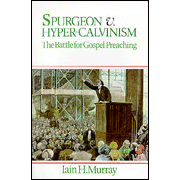 |
Spurgeon vs. Hyper-Calvinism: The Battle for Gospel Preaching By Iain H. Murray / Banner Of Truth In the wide coverage given to Spurgeon's ministry since his death in 1892, one controversy in which he was at the centre has been left largely untouched. It concerned what his Autobiography called 'the first serious attack' on his ministry. Fellow Baptists of Hyper-Calvinistic persuasion condemned him for believing that along with 'impassioned appeal to every sinner to come to Christ and be saved'. To this Spurgeon replied that he was not only teaching what was in the old Baptist Confessions, but, more important, his evangelistic preaching was true to the New Testament itself. After a portrait of Spurgeon as a man living for the Word of God, Iain Murray details the furore which his preaching caused among those who opposed his gospel preaching. 176 pgs. |
Subscribe to:
Posts (Atom)

 Posts
Posts